Hitori, Nurikabe or Norinori: Which Should You Learn First?
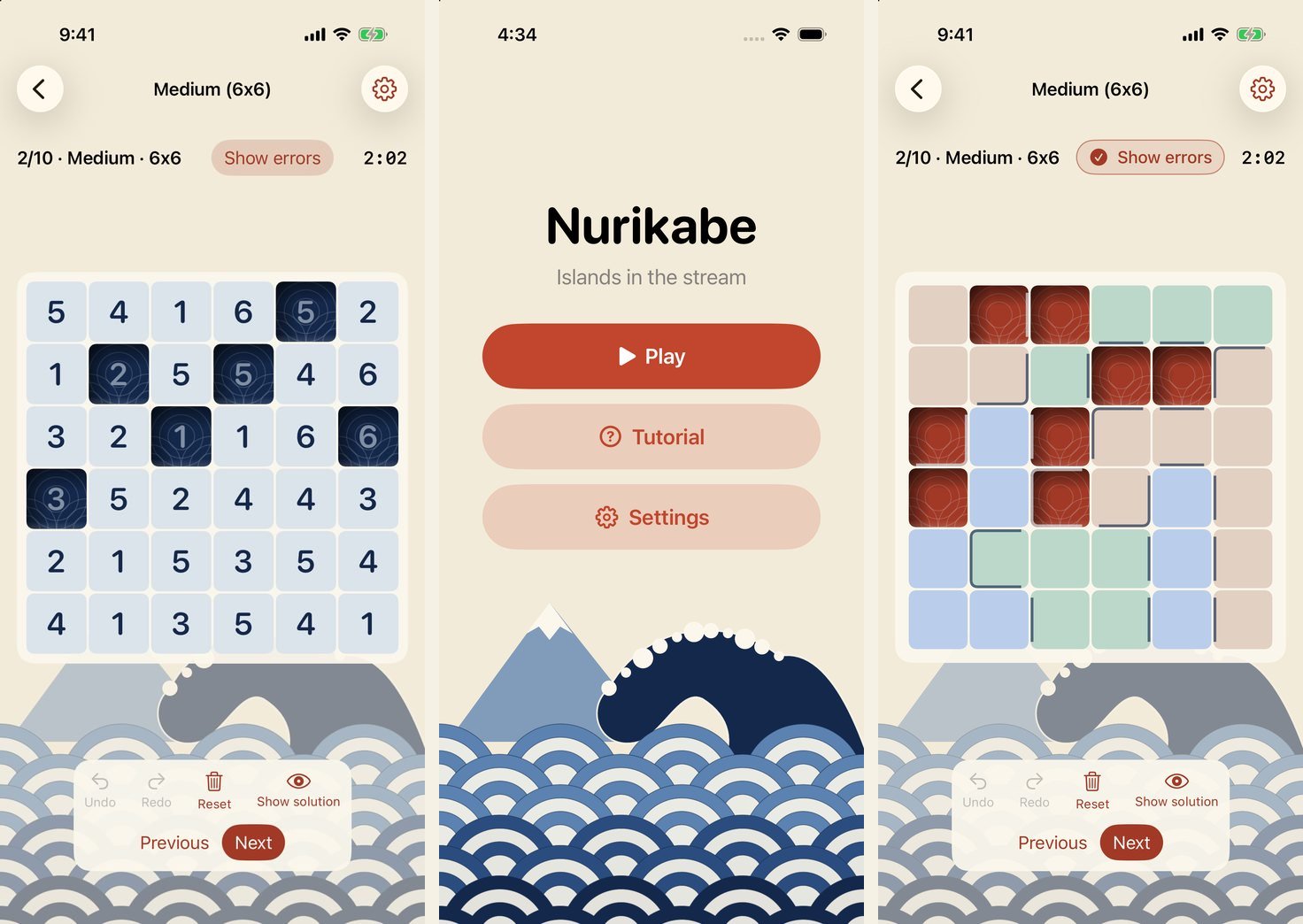
If you like Sudoku and want something new, these three are good next steps. They look alike (a grid, shaded squares, one right answer), but each rewards a different kind of thinking. Here is how they compare.
At a glance
| Hitori | Nurikabe | Norinori | |
|---|---|---|---|
| Clues | A number in every square | A few island sizes | Region shapes only, no numbers |
| You shade | Duplicates | The wall around islands | Two squares per region |
| Main rule | Shaded squares never touch; the rest stay connected | The wall is one piece with no 2x2 block | Shaded squares pair up as dominoes |
| Thinking style | Scan rows and columns | Build and measure shapes | Count and fit pieces |
Hitori: the scanner's puzzle
Every square has a number, so there is always something to look at. Your first moves come from spotting patterns in a row or column, such as a number sandwiched between two equal ones. If you enjoy scanning for repeats, Hitori gives you a quick foothold. The hard part comes later, when the connectivity rule starts to matter. Learn the four main moves.
Nurikabe: the builder's puzzle
The numbers here are island sizes, and everything else becomes one connected wall. You are constantly asking "can this island still reach its size?" and "where is the wall forced to go?" It is more spatial than Hitori, and it suits people who like to picture shapes. Learn the five main deductions.
Norinori: the quiet one
There are no numbers at all, only the outlines of regions. Each region holds exactly two shaded squares, and shaded squares pair off like dominoes that never touch. It looks sparse at first, but small regions give you your first certainties, and then the dominoes push you along. Learn the five main deductions.
Our suggestion
If you want the gentlest start, begin with Hitori, because the numbers give you something to latch onto. If you prefer drawing shapes to numbers and grids, try Nurikabe first. Come to Norinori for shapes and colors.
Whichever you choose, the habits are the same. Trust that there is one solution, mark what you know and go from there. See five habits of careful solvers.
Related articles
Do Puzzles Keep Your Brain Sharp? What the Research Actually Says
People who do puzzles score better on thinking tests, but that does not prove puzzles cause it. A plain-language look at what studies of crosswords, Sudoku and brain-training games do and do not show.
Read moreHelp Me Choose a Game
Not sure which logic puzzle to try? Answer two or three quick questions and get a suggestion from Hitori, Nurikabe, Norinori and Shikaku.
Read more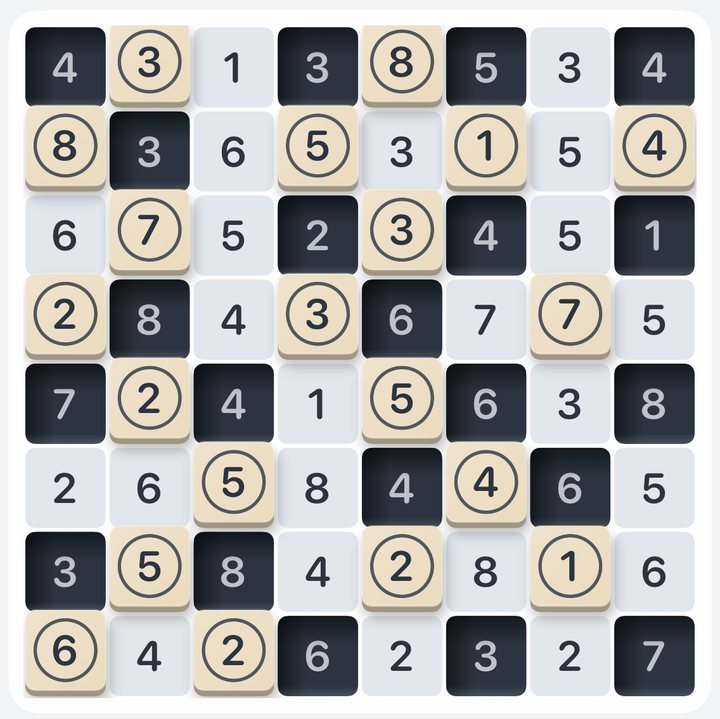
Hitori, Nurikabe and Norinori: Three Puzzles from Japan
Where the names come from and when each puzzle first appeared in print. All three are shade-the-squares puzzles from the Japanese publisher Nikoli.
Read more
Comments (0)
No comments yet.