Help Me Choose a Game
Hitori, Nurikabe, Norinori and Shikaku all fit on a small grid and all have exactly one answer, but they ask for different kinds of thinking. Answer a few questions and see which one suits you.
The short version
| What the numbers do | What you do | Good if you like | |
|---|---|---|---|
| Hitori | Every square has one; repeats are the target | Erase repeated numbers, keep the rest connected | Scanning for patterns |
| Nurikabe | Each is the size of an island | Grow islands, leave one connected wall | Picturing shapes |
| Norinori | There are none; regions are outlined | Shade exactly two squares per region, paired like dominoes | Starting from almost nothing |
| Shikaku | Each is the area of a rectangle | Cut the grid into rectangles, one number in each | Factoring and tiling |
If you are brand new to all of them, Which Should You Learn First? goes into more detail, and five habits of careful solvers applies to every one of them.
Related articles
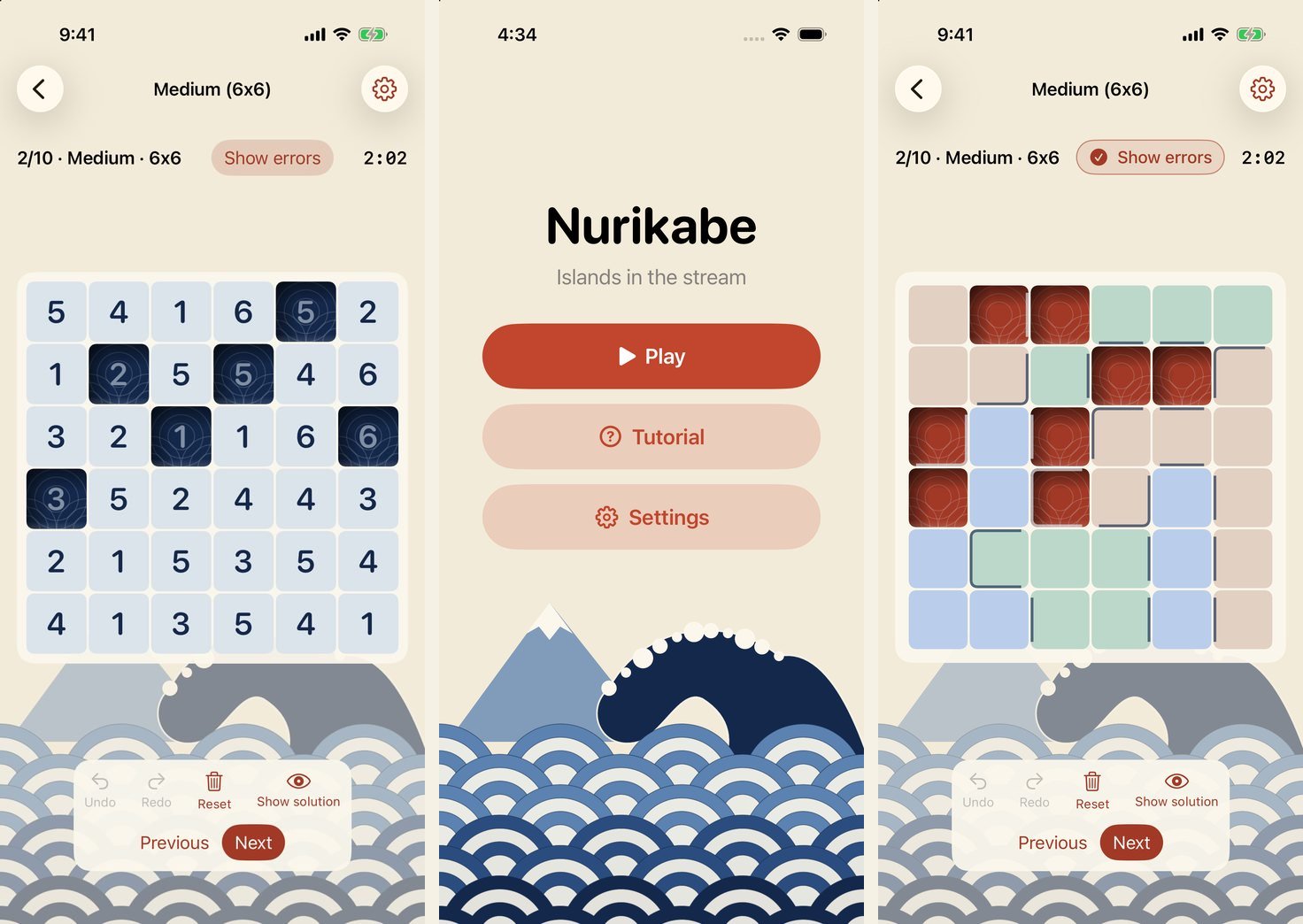
Hitori, Nurikabe or Norinori: Which Should You Learn First?
Three shade-the-squares puzzles, three different ways of thinking. How they compare, and which one to start with depending on how you like to solve.
Read more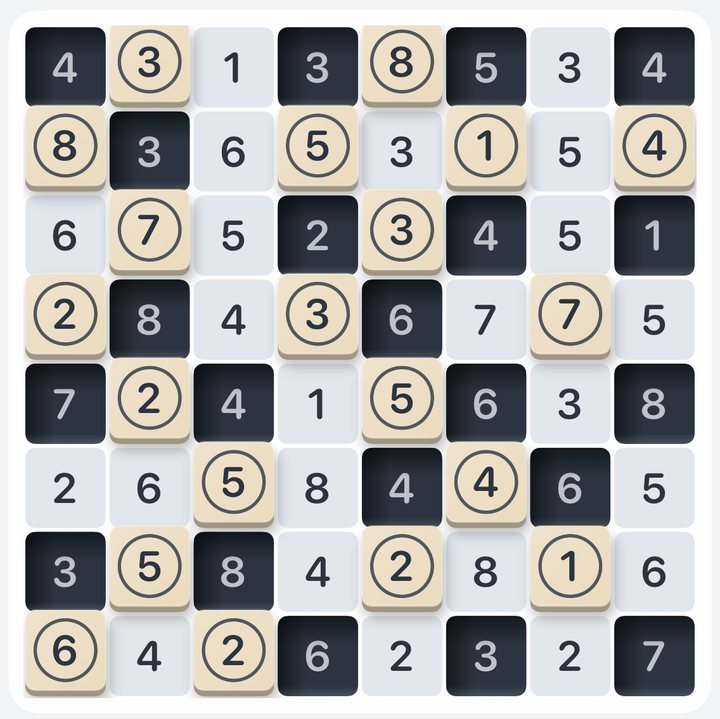
Hitori, Nurikabe and Norinori: Three Puzzles from Japan
Where the names come from and when each puzzle first appeared in print. All three are shade-the-squares puzzles from the Japanese publisher Nikoli.
Read moreFive Habits of Careful Logic-Puzzle Solvers
The same few habits work for Hitori, Nurikabe, Norinori and almost every pencil-and-paper logic puzzle: trust uniqueness, mark certainties, and never guess.
Read more
Comments (0)
No comments yet.