Hitori, Nurikabe and Norinori: Three Puzzles from Japan
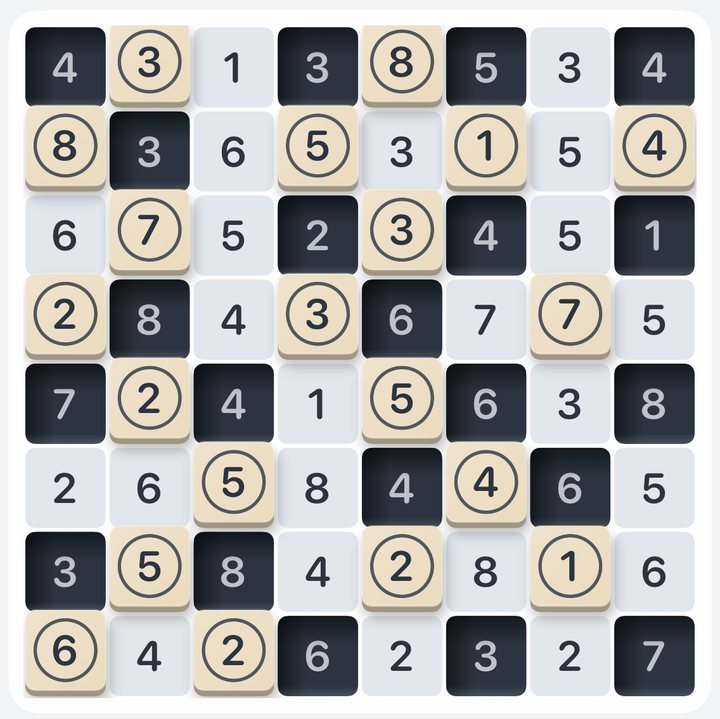
Hitori, Nurikabe and Norinori share more than interesting names. All three are "shade the squares" puzzles, and all three belong to the family of logic puzzles published by Nikoli, a Tokyo puzzle company founded in 1980. Its quarterly magazine, Puzzle Communication Nikoli, is where many of these puzzles first appeared in print.
Hitori: "leave me alone"
Hitori (ひとり) means "alone" or "one person." Nikoli's puzzle was originally titled Hitori ni shite kure (ひとりにしてくれ), which translates as "leave me alone." That fits the play: each number has to be left on its own in its row and column, so you shade out its duplicates until nothing is repeated.
Hitori is described as an original Nikoli puzzle. It first appeared in Puzzle Communication Nikoli in issue 29, in March 1990.
Nurikabe: the wall
Nurikabe (ぬりかべ) is named after a figure in Japanese folklore: an invisible wall that blocks the road and stops travelers in their tracks. In the puzzle, the wall is the part you build. Every square that is not part of an island belongs to one connected wall, and the wall is not allowed to form a 2x2 block.
The puzzle first appeared in issue 33 of Puzzle Communication Nikoli, in March 1991, and has been in every issue of the magazine from the 38th onward. Accounts of who invented it differ. One describes a reader who used the pen name "renin" (a Japanese reading of "Lenin"); another says Nikoli itself invented and named it. We have not found a primary source that settles the question.
Norinori: Nikoli's domino puzzle
Norinori appears on Nikoli's own site as one of its puzzles, with the rule given in the publisher's words: each area surrounded by bold lines must contain two black squares, and the black squares are placed in twos as blocks - like dominos.
The name Norinori originates from the Japanese word "nori" (のり), which means seaweed. The name refers to the dried seaweed sheets used in sushi, which resemble the dominoes created by shading cells in the grid.
What they have in common
- You never need to guess. A well-made puzzle has exactly one solution that logic alone will find.
- Every rule is local and simple to state, but the rules interact across the whole board.
- The only tool you need is a pencil and the habit of marking what you know for certain.
Sources
Related articles
Help Me Choose a Game
Not sure which logic puzzle to try? Answer two or three quick questions and get a suggestion from Hitori, Nurikabe, Norinori and Shikaku.
Read more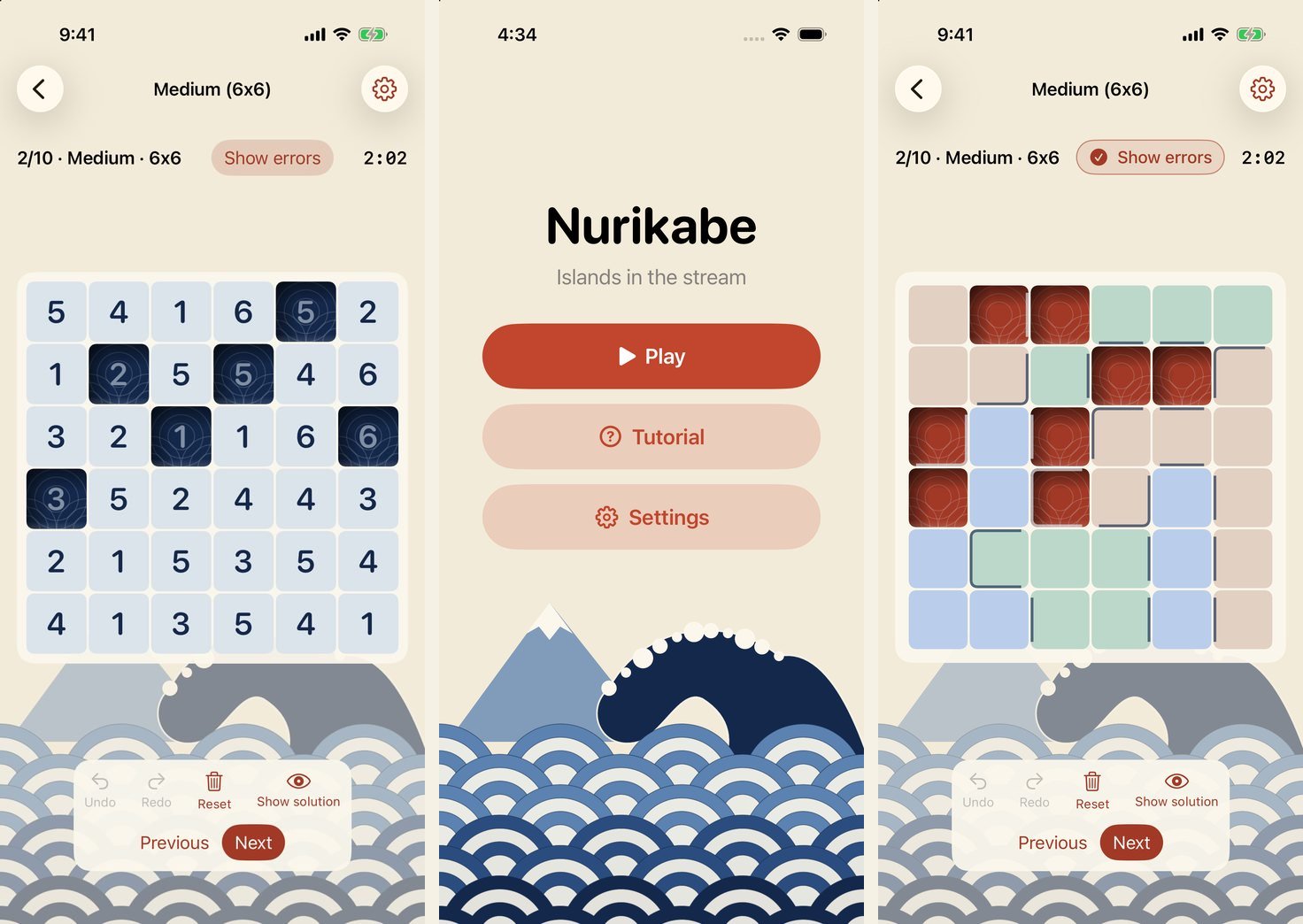
Hitori, Nurikabe or Norinori: Which Should You Learn First?
Three shade-the-squares puzzles, three different ways of thinking. How they compare, and which one to start with depending on how you like to solve.
Read more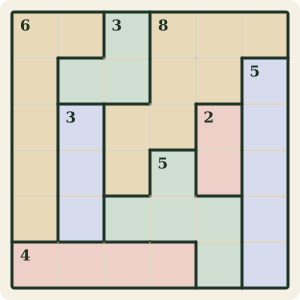
How to Solve Norinori: Two Per Region, Dominoes Only
Every colored region holds exactly two shaded squares, and shaded squares pair off like dominoes that never touch. Region sizes are the only clue. Here is how to read them.
Read more
Comments (0)
No comments yet.